
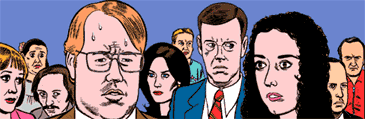
Janet Maslin called it "Subtly savage, evilly funny, " but
for those not used to laughing at pederasty and desperate characters jacking
off on screen, it could easily be the most electrifying American film to
break out of Cannes winning an International Critics' prize. The movie was
controversial even before it was distributed since Universal cancelled its
release in deference to the concerns of higher-ups. 
Todd Solondz, the director of Welcome to the Doll House, paints a broad, satiric portrait of contemporary suburbia and the psychological demons that haunt its inhabitants. While it is beautifully shot, compassionate, and unnervingly clear-eyed, it also makes you practically gag at times. Solondz describes his film as "a series of intertwining love stories, stories of connections missed and made between people, how people always struggle to make a connection, and to what degree they succeed or don't." Three middle-class New Jersey sisters all have their problems with their families and sex lives... problems that include pedophilia, obscene phone calling and murder.
Happiness explores the "demonic side of our nature," and cleverly gets you to see that no one is without it. In this sense, the film is act of understanding because it recognizes that horrifying behavior must come from some dark place in all of us. At all times he maintains a fine balance between heartbreak and humor. "You're often unsure," says Todd proudly, "whether to laugh or cry."
 Tormented by his sickness, a father called Bill (who is also a therapist)
has a heart-to-heart with his 11-year-old son about how he drugged and raped
the boy's best friend. Solondz refuses to depict Bill as a monster, and
he continues to impress us as a honest and caring father. The irony between
Bill's powerful, honest relationship with his son and his monstrous pedophilia
is calculated and contrived while managing to be powerful and moving. Solondz
offers us the complicated duality of a man who hates the monster inside
him while embracing the emotions such actions bring. Good people don't help
us cultivate our compassion, so characters like Bill can help us understand
ourselves better.
Tormented by his sickness, a father called Bill (who is also a therapist)
has a heart-to-heart with his 11-year-old son about how he drugged and raped
the boy's best friend. Solondz refuses to depict Bill as a monster, and
he continues to impress us as a honest and caring father. The irony between
Bill's powerful, honest relationship with his son and his monstrous pedophilia
is calculated and contrived while managing to be powerful and moving. Solondz
offers us the complicated duality of a man who hates the monster inside
him while embracing the emotions such actions bring. Good people don't help
us cultivate our compassion, so characters like Bill can help us understand
ourselves better.
Happiness definitely pushes the boundaries of taste and convention, and as the director says, "it's not for everyone and it's not designed for everyone and I don't think I'll ever write anything that's designed to appeal to everyone." Todd says the film exposes the cruelty and capacity for cruelty which is the most difficult and painful thing for anyone to acknowledge. Happiness is a sad movie, but it challenges us to look within and accept the dark side that lurks there-- and to laugh at it... perhaps even with it.
interview with Todd Solondz by Nitrate critic Sean Axmaker, and the official site
--AHB